Adventures with Ants
Wood ants are an impressive and ecologically important feature of native Scottish Woodlands. In the Arkaig Pinewoods we have two species of wood ant, the Scottish Wood Ant Formica aquilonia and the Northern Hairy Wood Ant Formica lugubris. Both can be found living more-or- less side by side in the Gusach, on the south side of the loch, particularly in the older parts of the woods around Ardnois. More than sixty nests have been identified and there are probably more. Wood ants are large, active ants that squirt formic acid to defend themselves and have powerful jaws for subduing prey, carrying organic material, and hanging on to the skin of unwary volunteers. They are well known for building large nests of woody material, which they maintain at a constant temperature and humidity via a complicated system of tunnels, chambers and air-vents. The largest nests in the Gusach are probably around a metre high and are likely to extend to a similar depth underground. The domed nests of the Scottish Wood Ant are covered in a dense thatch, which protects the underlying brood chambers and living quarters. Most of the ants to be seen are female workers, which change roles as they age, from tending the larvae and pupae, to repair and maintenance of the nest, foraging for food and defending the colony. In each colony there are several larger, shinier queens, possibly up to a hundred in the case of a large Scottish Wood Ant nest. The sole responsibility of the males is to breed. Winged ants (queens and males) emerge in late spring to engage in nuptial dances. The ants largely feed on the honeydew extruded by aphids, which they farm in nearby trees. This is supplemented by protein in the form of other invertebrates and carrion, which they rip apart and often carry long distances to the nest. Columns of foraging ants can be seen busily streaming across the woodland floor, and up preferred trees, and may also march between satellite colonies that bud off from the main nest. Hairy Wood Ants tend to produce a flatter-topped nest in clearings and on the edge of rides, and are not as shade tolerant as the Scottish Wood Ant.
Although the populations of both species of wood ant are thriving in the western part of the South Loch Arkaig pinewoods, there are none further east, nor are there any in Glen Mallie that we are aware of. Within a forest wood ants carry out several important tasks, including turning over the soil litter in the construction of their nests, dispersal of seeds, regulation of pest numbers (for example of defoliating caterpillars), as well as providing food for a variety of creatures. Their nests are also home to various commensal and parasitic invertebrates, and they provide a service to bird species such as the jay that clean their feathers by bathing in a spray of formic acid in a process known as anting. Wood ants are therefore considered a keystone species, which is currently missing from much suitable mixed coniferous and broadleaved woodland throughout Arkaig. One interesting possibility is that the spread of at least one rare plant species, the Small Cow-wheat, has been limited by the absence of wood ants, that are attracted to a fatty deposit on its seeds that they will then naturally disperse. For these reasons Woodland Trust Scotland, our partners in the Arkaig Pinewoods project, are keen to re-establish wood ants in other parts of the glen.
With this aim in mind, Arkaig Community Forest volunteers were keen to be involved in a pilot translocation project organised by Henry Dobson, former WTS manager at Arkaig, in his new role of estate manager for the Ardtornish Estate in Morvern. Wood ant colonies had been identified in a block of commercial forestry managed by Forest and Land Scotland west of Salen, which was due for clear-felling. As many of these nests as possible were to be moved from there to suitable south-facing woodland conveniently situated behind the estate offices at Ardtornish, where wood ants had not been seen for many years. To help the process naturalist and ecologist Nick Baker, who breeds ants, had been employed to supervise and oversee the whole process. So armed with shovels and midge repellent, Angela, Catriona and I drove the long road via Glenuig and Acharacle to Salen, where we met up with the rest of the team, including Clara Montgomery, the Ardtornish resident ecologist, Tom Edwards, their ecological adviser, and interested RSPB staff who look after the nearby Glencripesdale and Glenborrodale sites. Jared had been along the previous day with Bryony and had given us a heads up on what to expect, albeit coloured by being starstruck on meeting and working with Nick.
Hessian sacks were duly carried up to the nest sites. Nests were already busy and swarmed with activity. The spring sunshine had ensured that the ants had started their season early, and there were already some winged ants on the surface. The ants and their nest material were rather unceremoniously shovelled into the sacks in a disciplined routine, taking one layer of the nest at a time. Sacks were tied off and string knotted around the mouth in such a way as to identify which layer was which. Nick was fastidious in making sure we took as much of the nest as possible, even the layers below ground. This was not particularly easy as nests were often built around tree roots and contained much woody material, particularly from blaeberry. The sacks were then hauled – six to eight per nest – back down the hill, a nest as a time, to the back of waiting pick-up trucks. They then undertook a long forty-minute drive from Salen to Ardtornish, which provided the opportunity to chat and exchange stories. On the slopes behind the offices, suitable sites, well-positioned for sun and relatively free of woody vegetation (and other ants), were scraped clean to receive the new material. Sacks were then emptied in rough mounds, in reverse order of collection, with the thatch material on top. Nick added protein pots and glucose balls as supplementary feed. Ant activity began immediately, and within a few hours ants had already started to visibly repair the thatch on the new nests. The process was repeated several times with different subsets of people during the day, and it was after 8pm when we finally caught the Corran Ferry back home.
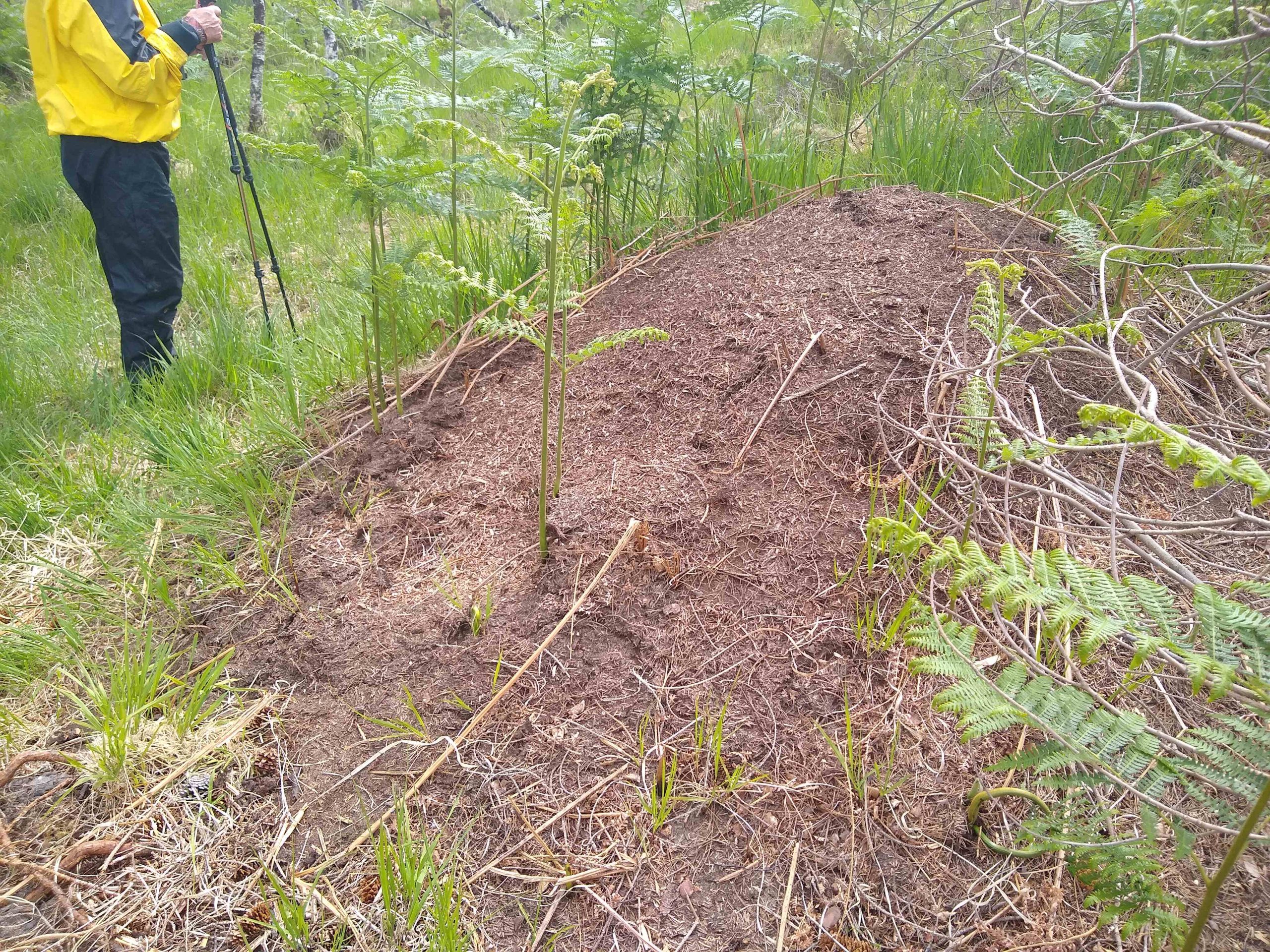
Contrast this with the rather less ceremonious project carried out at Arkaig less than two weeks later. Non-native conifers had already been felled in the Gusach over the winter, and some ant nests had been left high and dry with their favourite aphid trees carefully harvested. We decided that in the light of the continued warm, dry spell, we should crack on and try an experimental translocation of our own on the south side of Loch Arkaig. So it was that Angela and I (as the now de facto experts), along with Liam Wright, headed out on Arkaig Fire, to access a particularly large Scottish Wood Ant nest in Ardnois. Tracks made by Tarzan, the heavy, logging horse, facilitated access. The huge mound was buzzing and given its size, we decided only to collect part of the nest, taking material from one side only. Around 33% of the nest was dutifully shovelled into eight sacks. These were then carried down to the power boat, and the ants treated to a short cruise along the loch. Liam had identified an area about 1.5km to the east, that although logged, had a reasonable stand of mixed birch and pine remaining. Although not far from one of the landing stages, access was across a rather tricky patch of brash with a steepish slope to negotiate. An open area under a large old birch was selected and our first Arkaig translocated nest was reassembled. The process was then repeated with a smaller, much less active nest, that we translocated in its entirety from a large patch of clear-fell above a bog. This was carefully positioned to the east of a remnant Scots pine. The new nests were then provided with supplementary feed, before we sped off to the north shore.
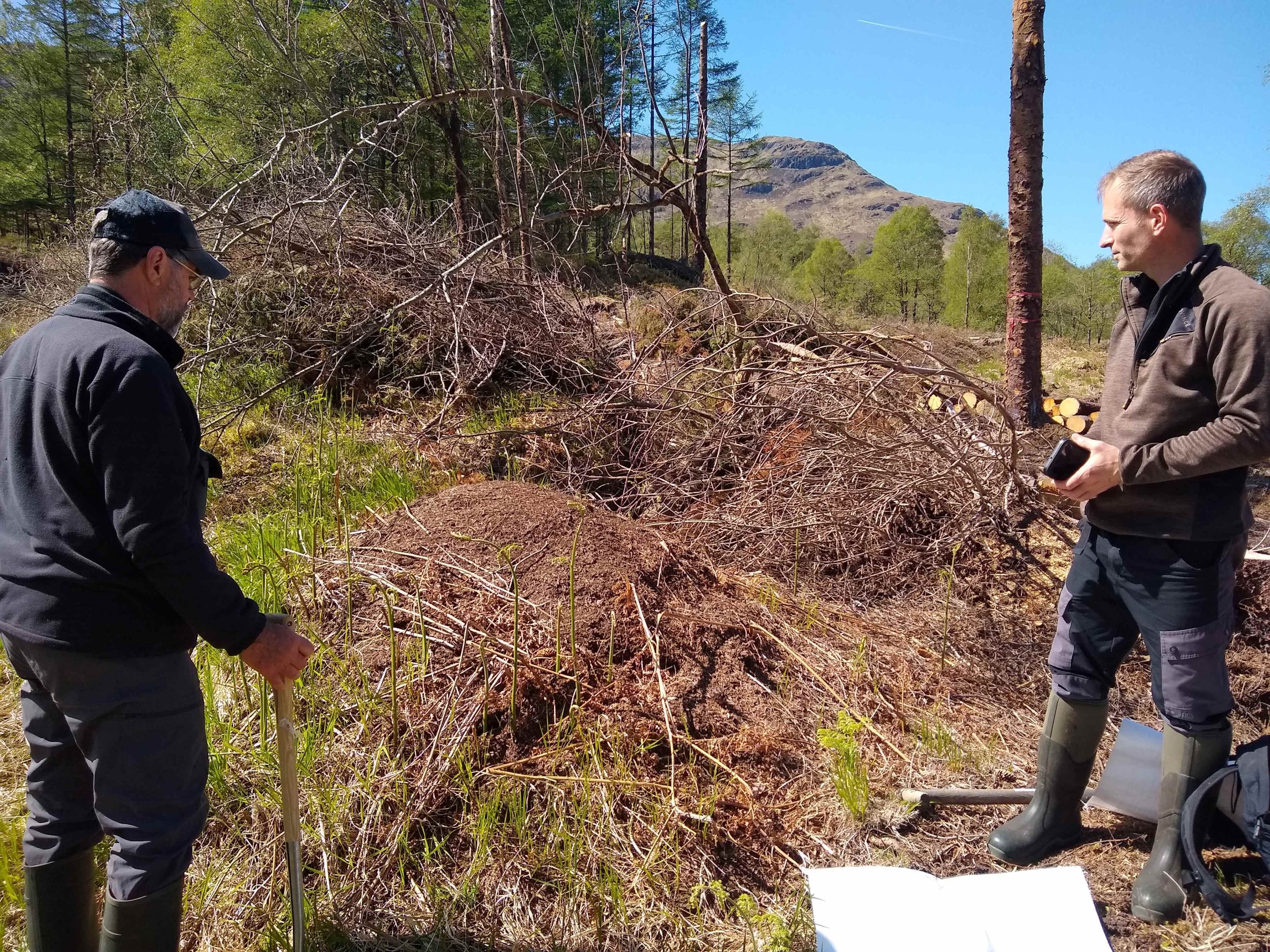
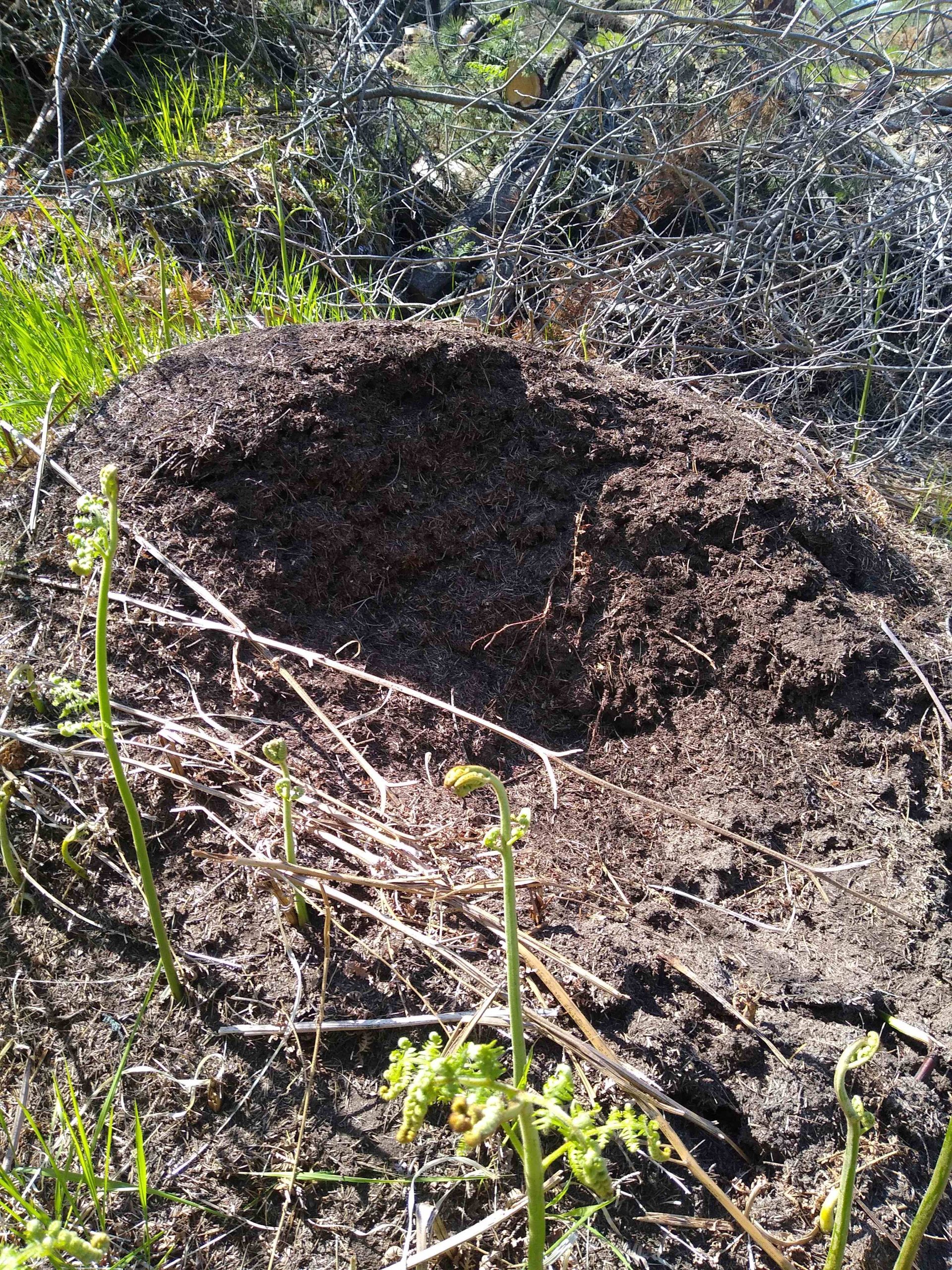
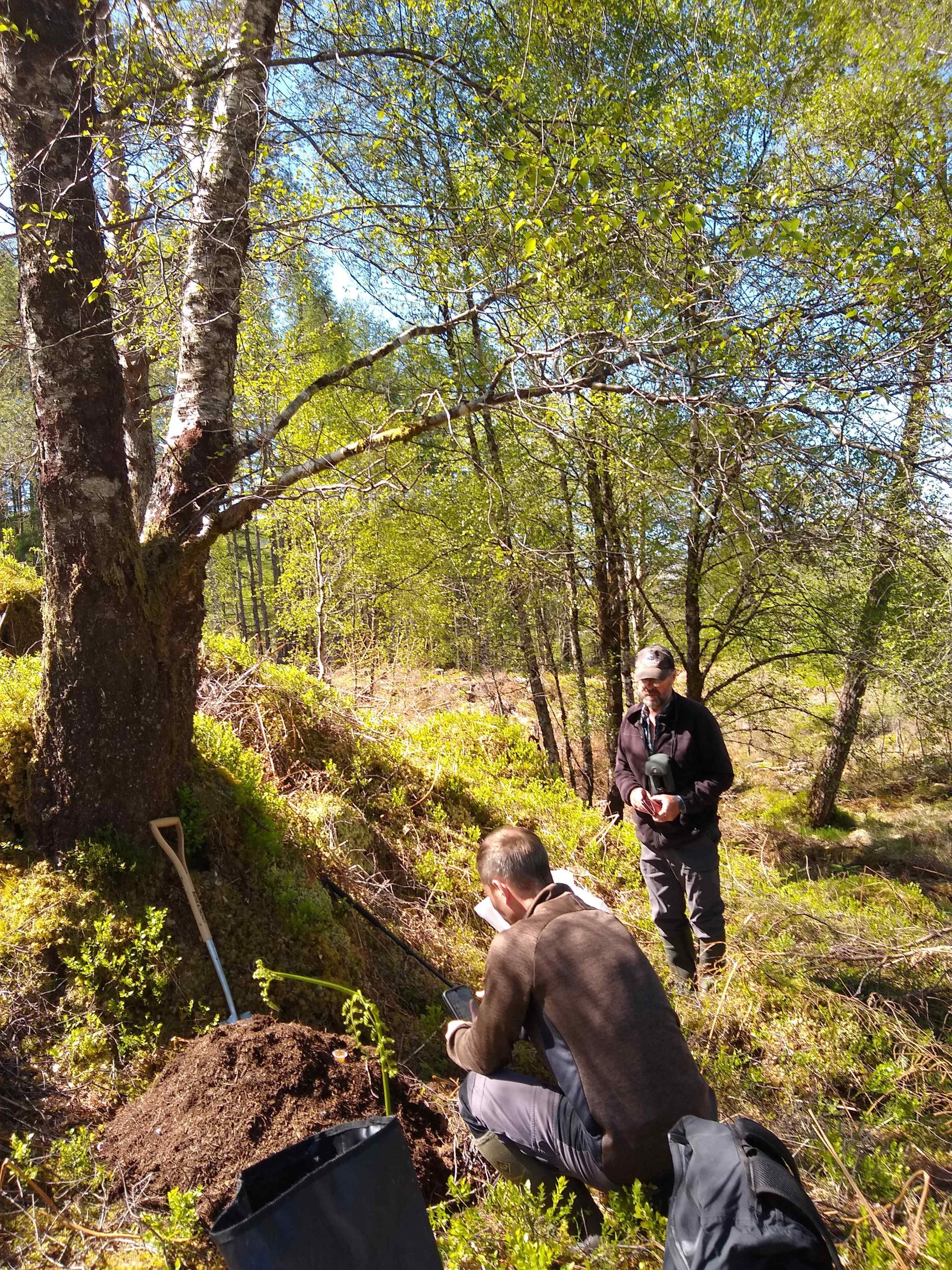
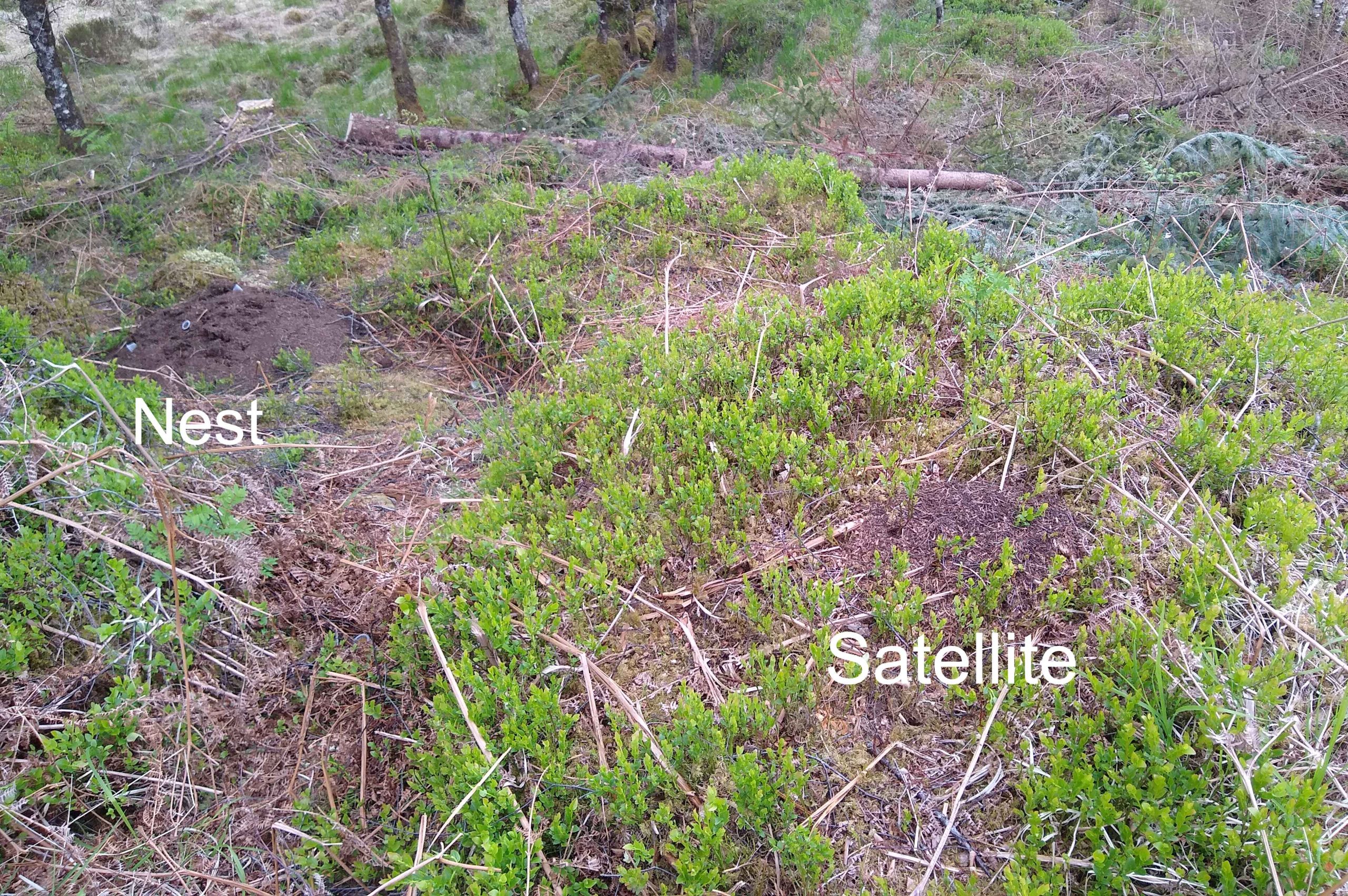
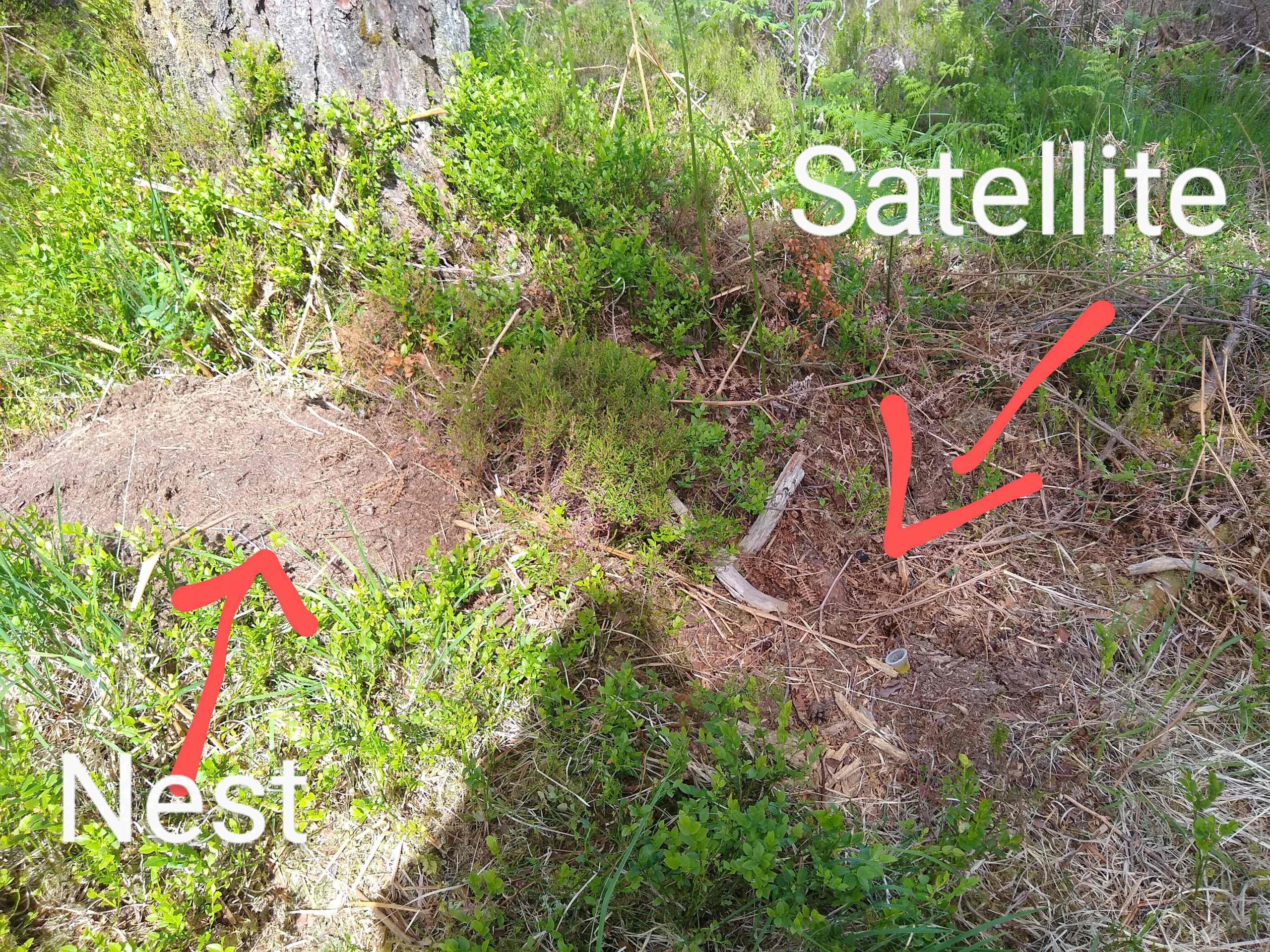
Angela and I returned three times by kayak over the next two weeks, and Liam managed a further trip on Arkaig Fire, to monitor the nests and make sure there was still feed available. After a few days both our translocated nests had created satellite nests in slightly more open positions a few metres from the originals. After two weeks the larger nest under the birch was still very active with a constat stream of ants between it and its satellite. The thatch on the large nest had been repaired and the nest itself seemed to have a proper structure. The smaller nest and its satellite appeared much less active, as feared (there were far fewer ants in the source nest), although ants could still be seen working on the pine-tree nest and its satellite. Rather more supplementary feed remained. It is possible, as the two original translocated nests were only around 50m apart, that the two colonies have merged, but we will continue to monitor activity to see what happens. The original large Ardnois nest was seemingly fully repaired with a full thatch after two weeks, and it was hard to see that it had been disturbed other than by comparison of size. At Ardtornish, ants also quickly started to form satellite nests and by the end of four weeks had almost all moved from their original translocated positions. Nick Baker reckoned that survival of translocated nests would be less than 50%, so perhaps this is to be expected. Further translocations are planned for next year, providing at least one of our ‘new’ nests is successful, but it looks like transfer of a partial nest may be the way to go.
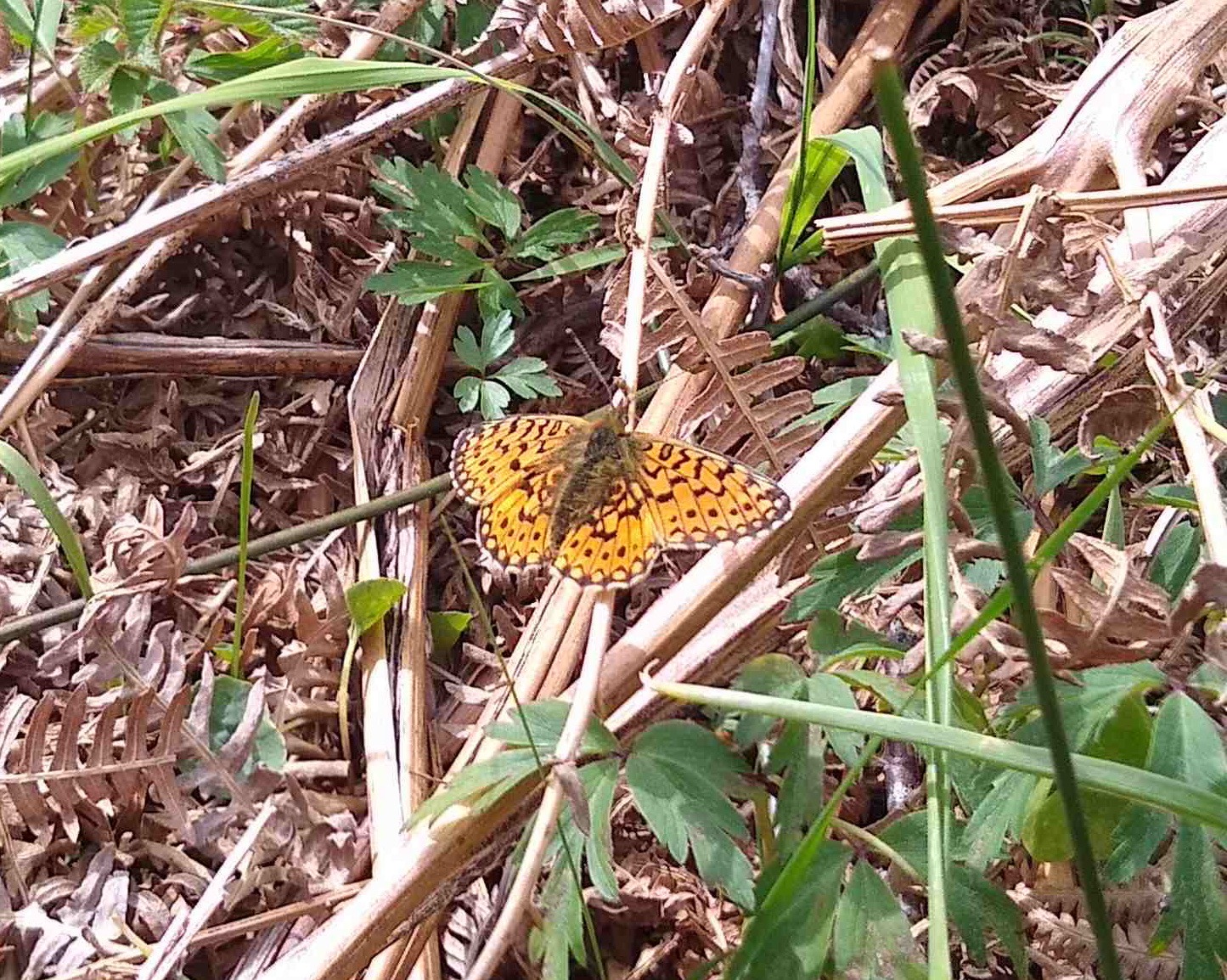
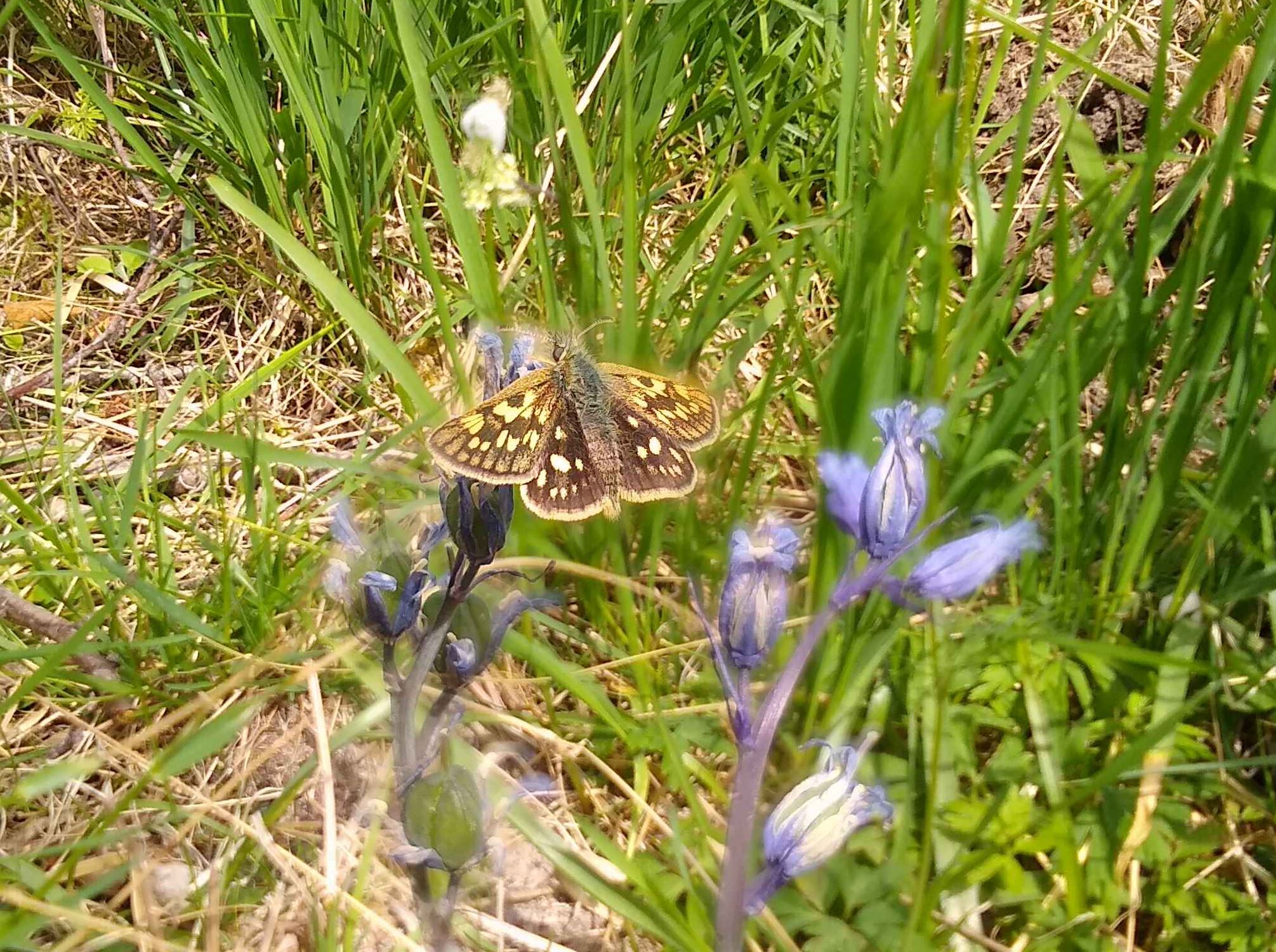
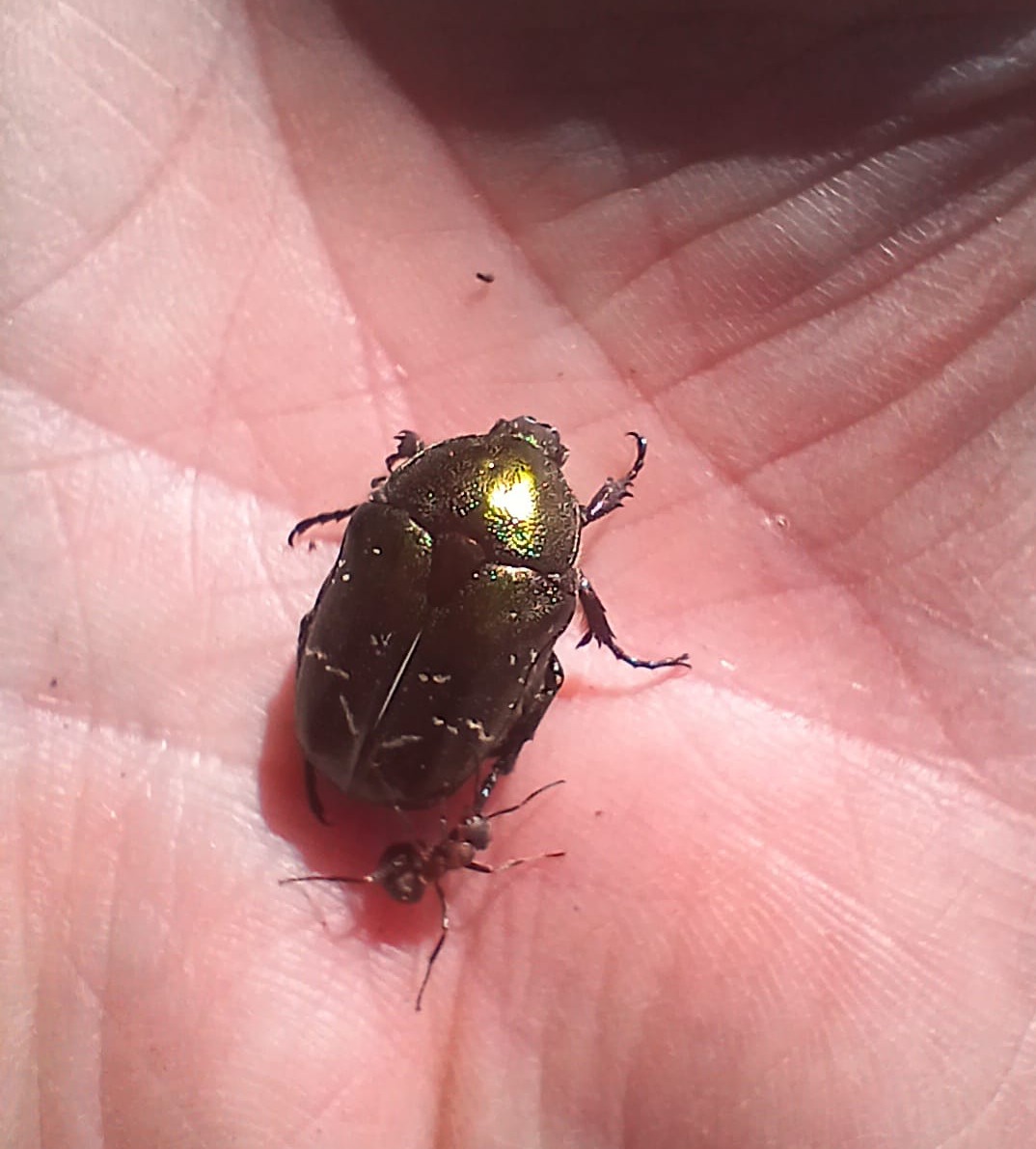
A bonus of making multiple spring trips to Ardnois was the opportunity to see and log other wildlife in the vicinity, particularly in the light of all the recent felling activity. We were delighted to see black-throated divers on each trip – usually a pair, but five just off Ardnois point on the first journey. These were invariably accompanied by a pair of greenshanks that must be nesting there, along with several common sandpipers and a pair of Canada geese. Cuckoos called constantly and we had a close fly-over of two birds. Willow warbler and tree pipits were ubiquitous. Ospreys were also active in this part of the loch, with one bird seemingly chasing another over the slopes of the Gusach. A good display of bluebells and wood anemones had survived the logging activities and we were treated to sights of butterflies and early dragonflies. Our early May visit yielded a pearl-bordered fritillary, whilst on the later trip we found a dispersed colony of chequered skippers, along with several small pearl-bordered fritillaries and a green hairstreak. Moths of note included chimney sweeper, a four-dotted footman and small argent-and-sable. Early dragonflies included a golden ringed dragonfly, 4-spot chasers, large-red damsels and emerald damsels. Perhaps most interesting of all, when we excavated the first nest a large, shiny beetle flew straight into the nest, which also contained a few rather large (2cm), white grubs – possibly progeny of a previous generation. This turned out to be the Northern Rose Chafer, a rare, largely Scottish species, confined mainly to the Cairngorms, and possibly the first record for Lochaber. It has an association with wood ant nests, where its larvae feed on woody detritus. Unidentified longhorn beetles were also found in the vicinity of newly cut stumps, along with commoner species such as the four-banded longhorn. It is heartening to see that the wildlife of the pinewoods is still thriving, and exciting to speculate on what else might be found if we look hard enough!
Jon Mercer, 25th May, 2025.